
Artificial intelligence has rapidly become a defining force in modern workplaces. From automating repetitive tasks to enabling data-driven decision-making, AI is reshaping industries across the globe.
In India, companies have embraced AI tools for recruitment screening, employee training, productivity tracking, and performance analytics. Yet, when it comes to one of the most sensitive aspects of human resources—promotions and leadership decisions—organizations remain cautious.
Recent insights, including findings associated with Deloitte, suggest that while Indian companies trust AI to assist in learning and development, they are far less comfortable allowing it to determine who climbs the corporate ladder. This gap reveals a deeper issue: the challenge of balancing technological efficiency with human judgment in high-stakes decisions.
The Expanding Role of AI in HR
Artificial intelligence, broadly defined as systems capable of performing tasks that typically require human intelligence such as learning, reasoning, and decision-making, has become integral to HR operations.
Organizations use AI to streamline hiring processes, analyze employee performance, predict attrition, and personalize training programs. These applications are largely data-driven and objective, making them well-suited for automation.
In India, HR departments are increasingly leveraging AI-powered dashboards and analytics tools to monitor employee progress and improve workforce planning. AI-enabled systems can process vast amounts of data quickly, offering insights that would be difficult for humans to generate manually.
However, the same efficiency that makes AI valuable in operational tasks also raises concerns when applied to subjective decisions like promotions.
Where AI Stops: Promotions and Leadership Decisions
Despite its growing presence, AI has not yet gained full acceptance in determining promotions, succession planning, or leadership appointments in India Inc. Companies prefer to rely on human judgment for these decisions, even when AI tools provide supporting data.
This hesitation is rooted in the complexity of leadership evaluation. Promotions are not based solely on measurable performance metrics; they also involve intangible qualities such as emotional intelligence, leadership potential, team dynamics, and organizational culture fit.
AI systems, while powerful, often struggle to capture these nuanced human attributes. As a result, HR leaders view them as tools for support rather than decision-makers.
The Trust Deficit: Why AI Faces Resistance
One of the central reasons for this hesitation is trust. Research indicates that people tend to trust human judgment more than AI when it comes to moral or responsibility-driven decisions.
In the Indian context, this trust gap is particularly pronounced. Employees and managers alike are more comfortable with human oversight in decisions that directly impact careers and livelihoods.
Several factors contribute to this trust deficit:
-
Lack of Transparency: AI algorithms can often function as “black boxes,” making it difficult to understand how decisions are made.
-
Fear of Bias: While AI is often promoted as unbiased, it can inherit biases from the data it is trained on.
-
Accountability Concerns: When a human makes a decision, responsibility is clear. With AI, accountability becomes less defined.
-
Emotional Disconnect: Promotions involve recognition, motivation, and morale—areas where human empathy plays a critical role.
These concerns make organizations cautious about fully delegating decision-making authority to AI systems.
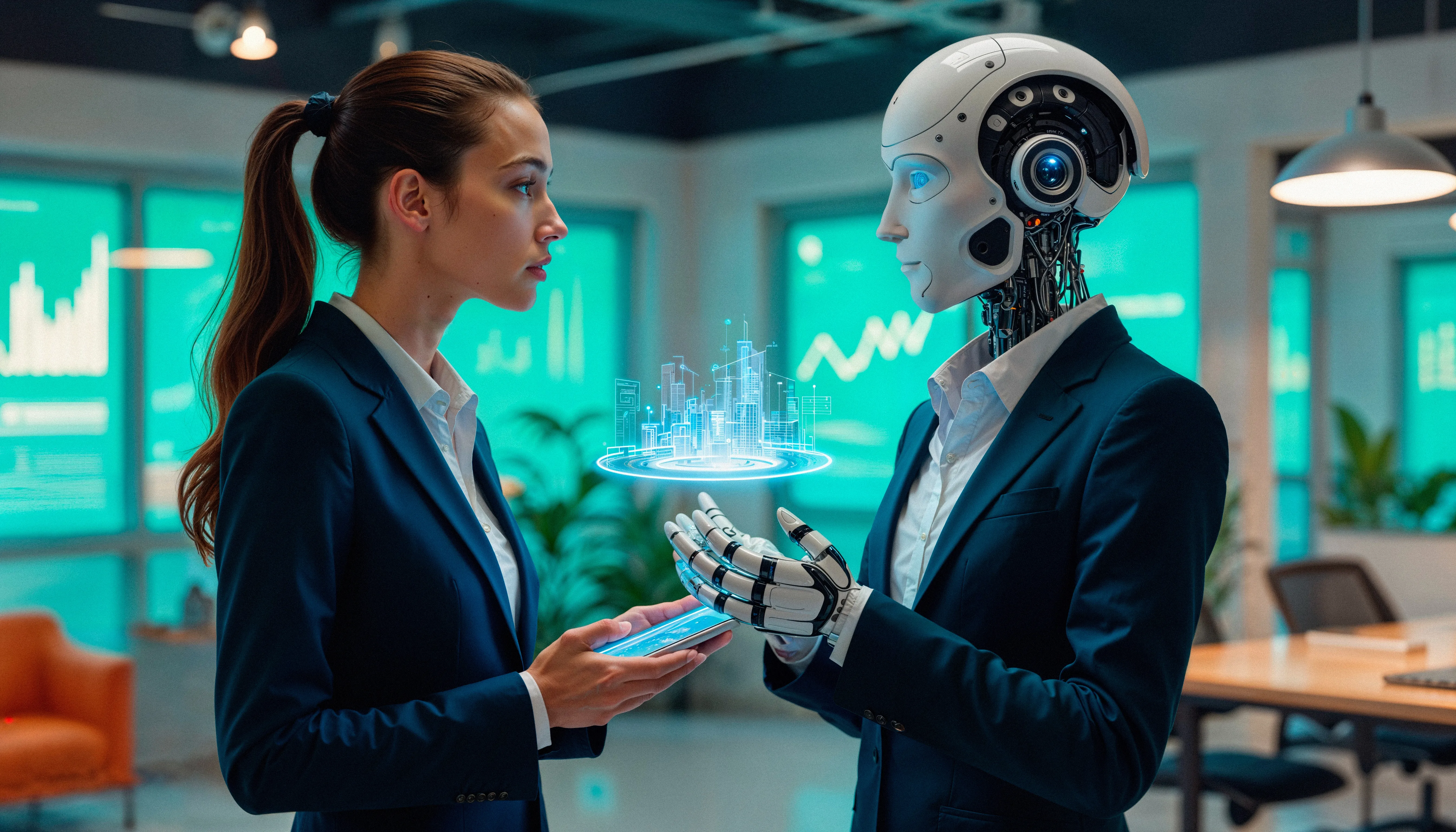
AI as an Enabler, Not a Decision-Maker
Rather than replacing human judgment, AI is currently being used as a decision-support tool in HR. It helps identify high-performing employees, track skill development, and highlight potential leaders.
For example, AI can analyze performance data to identify trends, flag inconsistencies, and provide recommendations. However, the final decision is typically made by human managers who consider additional qualitative factors.
This hybrid approach allows companies to benefit from AI’s analytical capabilities while retaining human oversight. It also helps build trust gradually, as employees become more familiar with AI-driven insights.
The Ethical and Cultural Dimension
The hesitation to use AI in promotions is not just a technological issue—it is also cultural and ethical.
In many organizations, promotions are deeply tied to interpersonal relationships, mentorship, and organizational culture. Decisions are often influenced by discussions, observations, and experiences that go beyond measurable data.
Introducing AI into this process raises ethical questions:
-
Can an algorithm fairly evaluate leadership potential?
-
How do organizations ensure that AI-driven decisions are transparent and explainable?
-
What safeguards are needed to prevent discrimination or bias?
These questions highlight the need for careful implementation and governance of AI systems in HR.
Global Trends vs. Indian Reality
Globally, some companies are experimenting with AI-driven decision-making in HR, including performance evaluations and promotion recommendations. However, even in advanced markets, full automation of such decisions remains rare.
In India, the adoption curve is even more cautious. While companies are eager to leverage AI for efficiency, they are equally aware of the risks associated with over-reliance on technology.
Interestingly, there is a growing recognition among professionals that AI skills can enhance career prospects. Surveys indicate that many employees believe AI expertise can lead to better pay and faster promotions.
This creates a paradox: while individuals see AI as a tool for advancement, organizations are hesitant to let it decide advancement.
The Path Forward: Building Trust in AI
For AI to play a larger role in HR decision-making, organizations need to address the trust gap. This requires a combination of technological improvements and organizational strategies.
Key steps include:
-
Improving Transparency: Developing explainable AI systems that clearly show how decisions are made.
-
Ensuring Fairness: Regular audits to detect and eliminate bias in AI models.
-
Human Oversight: Maintaining a balance between automation and human judgment.
-
Employee Involvement: Engaging employees in the design and implementation of AI systems.
-
Training and Awareness: Educating HR professionals and employees about how AI works and its limitations.
By taking these steps, companies can gradually increase confidence in AI-driven processes.
The Future of AI in Promotions
While AI is unlikely to fully replace human decision-making in promotions anytime soon, its role is expected to grow. As technology evolves, AI systems may become better at analyzing complex human traits and predicting leadership potential.
However, the future of HR is likely to remain collaborative rather than fully automated. Human judgment, empathy, and contextual understanding will continue to play a crucial role in career decisions.
The goal is not to replace humans with machines, but to create a system where both work together effectively.
Conclusion
AI is transforming workplaces across India, bringing efficiency, insights, and new possibilities. Yet, when it comes to promotions and leadership decisions, trust remains a significant barrier.
Organizations recognize the value of AI but are cautious about its limitations. By using AI as a support tool rather than a decision-maker, they are navigating a complex balance between innovation and responsibility.
As technology advances and trust in AI grows, this balance may shift. For now, however, the human element remains at the heart of career progression—reminding us that not all decisions can, or should, be automated.
pulsitera.shop pulsitera.shop pulsitera.shop pulsitera.shop pulsitera.shop pulsitera.shop pulsitera.shop pulsitera.shop pulsitera.shop pulsitera.shop pulsitera.shop pulsitera.shop pulsitera.shop pulsitera.shop pulsitera.shop pulsitera.shop pulsitera.shop pulsitera.shop pulsitera.shop pulsitera.shop pulsitera.shop pulsitera.shop pulsitera.shop pulsitera.shop pulsitera.shop pulsitera.shop pulsitera.shop pulsitera.shop pulsitera.shop pulsitera.shop pulsitera.shop pulsitera.shop pulsitera.shop pulsitera.shop pulsitera.shop pulsitera.shop pulsitera.shop pulsitera.shop pulsitera.shop pulsitera.shop pulsitera.shop pulsitera.shop pulsitera.shop pulsitera.shop pulsitera.shop pulsitera.shop pulsitera.shop pulsitera.shop pulsitera.shop pulsitera.shop pulsitera.shop pulsitera.shop pulsitera.shop pulsitera.shop pulsitera.shop pulsitera.shop pulsitera.shop pulsitera.shop pulsitera.shop pulsitera.shop pulsitera.shop pulsitera.shop pulsitera.shop pulsitera.shop pulsitera.shop pulsitera.shop pulsitera.shop pulsitera.shop pulsitera.shop pulsitera.shop pulsitera.shop pulsitera.shop pulsitera.shop pulsitera.shop pulsitera.shop pulsitera.shop pulsitera.shop pulsitera.shop pulsitera.shop pulsitera.shop pulsitera.shop pulsitera.shop pulsitera.shop pulsitera.shop pulsitera.shop pulsitera.shop pulsitera.shop pulsitera.shop pulsitera.shop pulsitera.shop pulsitera.shop pulsitera.shop pulsitera.shop pulsitera.shop pulsitera.shop pulsitera.shop pulsitera.shop pulsitera.shop pulsitera.shop pulsitera.shop pulsitera.shop pulsitera.shop pulsitera.shop pulsitera.shop pulsitera.shop pulsitera.shop pulsitera.shop pulsitera.shop pulsitera.shop pulsitera.shop pulsitera.shop pulsitera.shop pulsitera.shop pulsitera.shop pulsitera.shop pulsitera.shop pulsitera.shop pulsitera.shop pulsitera.shop pulsitera.shop pulsitera.shop pulsitera.shop pulsitera.shop pulsitera.shop pulsitera.shop pulsitera.shop pulsitera.shop pulsitera.shop pulsitera.shop pulsitera.shop pulsitera.shop pulsitera.shop pulsitera.shop pulsitera.shop pulsitera.shop pulsitera.shop pulsitera.shop pulsitera.shop pulsitera.shop pulsitera.shop pulsitera.shop pulsitera.shop pulsitera.shop pulsitera.shop pulsitera.shop pulsitera.shop pulsitera.shop pulsitera.shop pulsitera.shop pulsitera.shop pulsitera.shop pulsitera.shop pulsitera.shop pulsitera.shop pulsitera.shop pulsitera.shop pulsitera.shop pulsitera.shop pulsitera.shop pulsitera.shop pulsitera.shop pulsitera.shop pulsitera.shop pulsitera.shop pulsitera.shop pulsitera.shop pulsitera.shop
infinityinspires.com codecraftes.com linklaunches.com pixelperkes.com quantumquestes.com sunshinstates.com techsthrive.com webeswhiz.com webswisdoms.com